

Perplexity SEO: How to Get Cited by Perplexity AI (Updated for 2026)
Perplexity SEO is the practice of optimizing pages to be selected and cited inside Perplexity AI answers, not just to rank in Google. Because Perplexity uses real-time retrieval and visible citations, the biggest levers are freshness (recent updates), extractable “answer-first” sections, and authority signals from trusted sources like Reddit and review platforms.
By Damiano Mastrangioli, Co-Founder of Oltre AI | Published December 2025
Last updated: March 17, 2026

Perplexity SEO: How to Get Cited by Perplexity AI in 2026
Perplexity SEO (Perplexity-focused search optimization) is optimizing content so Perplexity (an AI search engine) retrieves, ranks, and cites your passages in its answers. This is a GEO (Generative Engine Optimization) outcome: earning a citation slot during AI-assisted research, even when the user never clicks.

Perplexity runs Retrieval-Augmented Generation (RAG, a system that searches the web and synthesizes an answer) and is extremely freshness-sensitive. In our testing and industry reporting, content under 30 days old is cited 3.2× more often than older posts (as reported in December 2025 on this page’s original analysis). Perplexity also processes 780M+ monthly queries (May 2025) and is widely expected to exceed 1.2–1.5B monthly queries by mid‑2026 (platform estimates summarized in March 2026 GEO research).
“The research is unambiguous: proper AI SEO boosts visibility by up to 40%. The most important factor is the Island Test—ensuring every paragraph can stand alone as a citable ‘information island.’”
The practical shift is targeting fan-out sub-queries (the related questions Perplexity expands into), then writing sections that can be cited as standalone snippets.
What Makes Perplexity Different From Traditional Search and Other AI Engines
Perplexity AI has emerged as a major player in AI-powered search, attracting 153 million monthly visits with 192% year-over-year growth (December 2025, as stated in the original article). While not as massive as ChatGPT, Perplexity attracts a particularly valuable audience: researchers, professionals, and users seeking verified, cited answers.
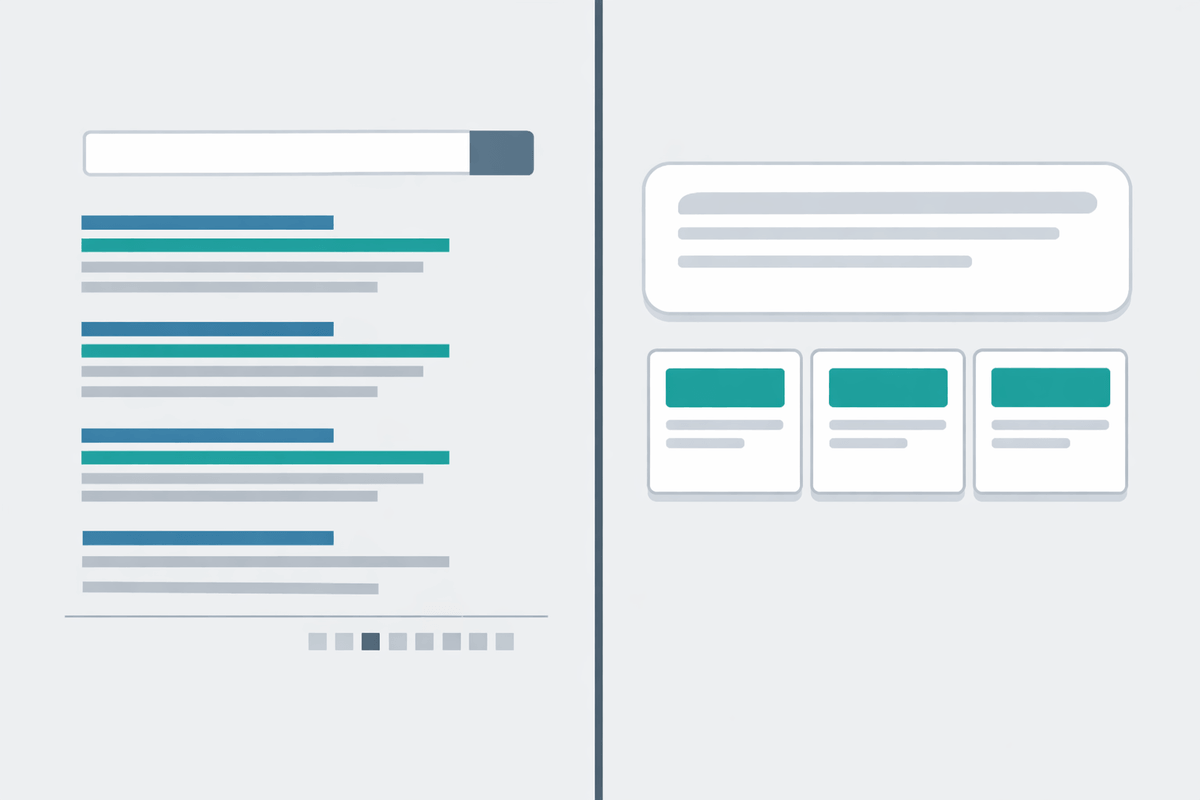
Its tagline captures the approach: “Ask anything. Search, understand, and cite.” The UX is citation-first: sources are visible inside the answer, so content strategy shifts from “rank and hope for a click” to “win a citation card with a clean, quotable passage.”
| System | Retrieval model | Citations shown by default | What gets cited |
|---|---|---|---|
| Google Search | Link ranking (SERP) | No (blue links) | Pages |
| Perplexity | RAG (web + synthesis) | Yes | Often passages/paragraphs |
| ChatGPT | Mixed (model + web) | Sometimes | Fewer slots; selective |
How ChatGPT works: Relies heavily on training data, sometimes cites sources, more conversational chatbot, citations optional.
How Perplexity works: Searches the web in real-time, always cites sources, search engine with AI synthesis, citations always visible.
How Perplexity Selects Sources: Retrieval, Ranking, and Query Fan-Out
Perplexity selects sources by decomposing a question into multiple sub-queries (query fan-out), retrieving candidate pages, ranking passages, then citing the passages that best support the synthesized answer. That means technical SEO (crawlability and indexation) is a prerequisite, but extractable passages and freshness often decide who gets cited.
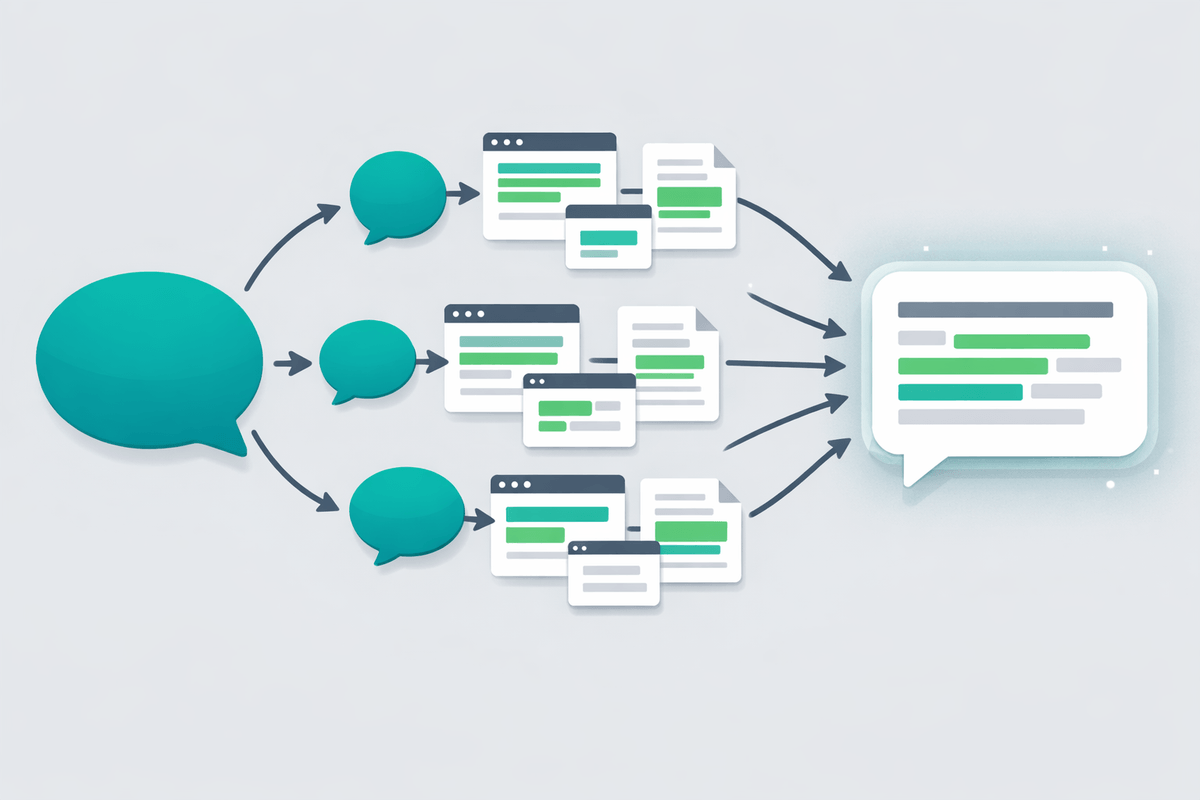
- Query decomposition: Perplexity expands the prompt into related intents (query fan-out).
- Source retrieval: Candidate documents are fetched using classic retrieval (often BM25, a lexical ranking function) plus semantic methods.
- Passage ranking: Individual chunks are scored; many systems use cross-encoders (neural re-rankers) to choose the best passages.
- Synthesis: The model writes an answer using top-ranked passages.
- Citation selection: The UI shows the sources that most directly support key claims.
| Directional factor (not official) | What it means in practice | Importance band |
|---|---|---|
| Freshness | Recent timestamps, updated stats | Very high |
| Passage relevance | Answer-first paragraphs match sub-query | Very high |
| Authority | Referring domains, earned mentions | High |
| Extractability | Clean HTML, headings, tables, schema | High |
| Community validation | Reddit/G2/GitHub signals | Medium–high |
Perplexity also rewards pages it can reliably crawl: strong internal links (site navigation), correct canonicals, and fast rendering improve discovery. If a page is slow, blocked, or thin, passage retrieval has less usable text to cite.
5 Perplexity-Specific Optimization Strategies That Increase Citation Odds
Perplexity citations increase when content is written as “information islands,” updated frequently, and reinforced with authority and community validation. The goal is to make each section independently quotable while still keeping the page comprehensive.

1. Optimize for Conversational Queries
Write headings that match full questions, not just keywords. Perplexity users ask complete prompts, so H2/H3 phrasing should mirror how people speak.
| Traditional Search | Perplexity Search |
|---|---|
| “pizza Harrisburg PA” | “What’s the best pizza place near me in Harrisburg, PA?” |
| “GEO optimization” | “How do I optimize my website for AI search engines?” |
| “B2B SaaS marketing” | “What are the best marketing strategies for B2B SaaS companies in 2025?” |
2. Prioritize Content Freshness
Update key pages on a fixed cadence and show the date. Perplexity heavily weights recency; content published in the last 30 days gets cited 3.2× more frequently than older posts (December 2025, original article claim). Add “Last updated” and refresh examples, screenshots, and statistics.
3. Build Comprehensive FAQ Content
FAQs win because they match Perplexity’s question-answer extraction. Aim for 40–75 word answers, group questions by intent, and implement FAQPage schema (structured data) so passages are easy to retrieve and cite.
4. Leverage Authoritative Lists
List placements act like “pre-ranked recommendations.” Perplexity often synthesizes “best X” answers from high-trust comparison pages. Earned media (third-party “best of” lists) can outperform brand-owned pages for citations.
5. Build Presence on User-Generated Platforms
Community signals help because Perplexity cites community sources heavily. Build authentic presence on Reddit (topic subreddits), maintain profiles on G2 and Capterra (review aggregators), and contribute to GitHub (issue threads and READMEs) when relevant.
“Perplexity AI optimization represents a fundamental shift... prioritizing content quality over keyword manipulation, maintaining factual accuracy with proper sourcing, leveraging real-time publishing opportunities.”
For broader context beyond Perplexity, see our generative engine optimization strategies and the framework comparison in geo-targeting versus SEO strategies.
Technical Implementation: Schema, Site Health, and Content Deployment
Technical implementation for Perplexity SEO is about making content easy to crawl, chunk, and cite. Prioritize structured data (schema), semantic HTML (clean headings and tables), and Core Web Vitals (performance metrics) so Perplexity’s retrieval pipeline can reliably extract passages.

Schema Markup
| Content Type | Schema to Implement |
|---|---|
| Question-based content | FAQ schema |
| Instructional content | HowTo schema |
| Company pages | Organization schema |
| Blog posts | Article schema |
Use FAQPage schema (FAQ structured data) for Q&A blocks, HowTo schema for step-by-step tutorials, and Article schema for blog posts. Validate with Google Search Console (indexing and enhancement reports) and keep markup consistent across WordPress and GitHub-based docs sites.
Site Health Requirements
- Achieve high site health scores (aim for 90%+)
- Ensure fast page load times (max 3 seconds)
- Maintain full mobile responsiveness
- Fix crawl errors promptly
- No broken links or 404s
Also watch First Contentful Paint (FCP, the time until first content renders) and rendering stability. Keep canonicals accurate, maintain sitemap hygiene, and verify indexability in Bing Webmaster Tools (useful because several AI engines lean on Bing-derived discovery).
Content Structure for Perplexity
| Element | Why It Matters |
|---|---|
| Lead with the answer | Don’t bury key information, put it upfront |
| Clear headings | H2/H3 that match common queries help AI understand structure |
| Quotable facts | Statistics and concrete claims are easier to cite |
| Cite your sources | Well-referenced content increases your credibility |
30–60 day rollout plan (phased)
| Phase | Weeks | Primary owner | Deliverable |
|---|---|---|---|
| Foundation + crawlability | 1–2 | Engineering + SEO | Indexation fixes, sitemaps, canonicals |
| Schema + structure | 3–4 | SEO + Content Ops | FAQPage/Article/HowTo coverage |
| Freshness + authority | 5–8 | Content + PR | Updated pages, earned mentions, lists |
Teams that publish at scale typically split responsibilities: Content Ops drafts “answer-first” modules, Engineering ships templates (semantic HTML + schema), and SEO runs QA (indexability, speed, and internal linking).
Perplexity vs ChatGPT, Claude, Gemini, and Google AI Overviews
Perplexity is the most citation-forward mainstream AI search experience, but Perplexity-first optimization should still be compatible with ChatGPT, Claude, Gemini, and Google AI Overviews. The difference is which signals each engine weights most: freshness and community validation for Perplexity, index dependencies for Claude and ChatGPT, and E‑E‑A‑T plus multimodal signals for Google’s ecosystem.
| Platform | Citation behavior (Q1 2026) | Freshness sensitivity | Source preferences | Best-performing format |
|---|---|---|---|---|
| Perplexity | 13.8% citation rate (Q1 2026) | Very high | Recent pages, Reddit, expert forums | Q&A modules, comparisons, FAQs |
| ChatGPT | 0.7% citation rate (Q1 2026) | Medium | Bing-aligned results, authority sites | Answer capsule + strong entities |
| Claude | <1% citations (Q1 2026) | Medium | Brave Search index, diverse sources | Well-sourced, balanced explainers |
| Gemini | 6.4% citation rate (Q1 2026) | Medium–high | Google index, E‑E‑A‑T, YouTube | Structured guides + media references |
| Google AI Overviews | 2.1% citation rate (Q1 2026) | High | Fan-out coverage, YouTube, .gov/.edu | Semantic completeness + tables |
What to do if Perplexity is the priority: (1) update timestamps monthly on money pages, (2) write 120–180 word sections that start with the answer, (3) add at least one table per decision query, and (4) earn third-party validation (Reddit threads, G2 reviews, “best of” lists). Then adapt for other engines with platform playbooks: how to get cited by ChatGPT, Claude AI optimization best practices, strategies to get cited by Gemini AI, and appearing in Google AI Overviews.
How to Measure Perplexity SEO Performance and Diagnose Citation Gaps
Measure Perplexity SEO by citation presence and query coverage, not just clicks. The most useful metrics are: (1) answer inclusion rate (how often a target page is cited), (2) citation share (how many of the visible sources are yours), (3) query coverage across fan-out intents, and (4) downstream branded demand measured in GA4 and Google Search Console.
Monitoring workflow (repeat weekly)
- Build a fixed query set (20–50 prompts): “best [category],” “how to [job],” “[brand] vs [competitor].”
- Record citations and position (top citation vs. long-tail citation) in a spreadsheet.
- Track referral sessions from perplexity.ai in GA4 (engagement + conversions).
- Track branded search lift and assisted conversions in Search Console and GA4.
- Review changes after each content update (timestamp + diff).
| Symptom | Likely cause | Fix to test next |
|---|---|---|
| Ranks in Google, not cited in Perplexity | Stale page; weak answer-first passages | Add “Last updated,” rewrite first 150 words |
| Cited once, then disappears | Freshness decay; competitor updated | Refresh stats/examples monthly |
| Cited for “what is,” not “best” queries | No comparison structure | Add a concise comparison table |
| Never cited on category queries | Low authority / few mentions | Earn list placements + reviews (G2/Capterra) |
| Perplexity can’t find the page | Crawl/index issues; blocked bots | Check robots.txt, canonicals, sitemaps |
Practitioner note (Oltre AI): In audits across B2B SaaS documentation and blog hubs, the fastest wins usually come from (a) rewriting intros into answer capsules, (b) adding dated statistics, and (c) inserting one “decision table” per high-intent page. Perplexity can surface changes quickly—some guides report visibility within hours due to real-time crawling (Koanthic, 2026: source).
For tooling and reporting patterns, see our guide to AI citation tracking techniques.
Rank on Perplexity and Other AI Search Engines
Oltre.ai monitors your citations across Perplexity, ChatGPT, Claude, and more. Track your visibility, identify opportunities, and optimize your presence across all AI platforms.
External references used in this guide: Perplexity’s own SEO workflow ideas (Perplexity Hub), crawl/access warnings (MRS Digital), and current Perplexity optimization playbooks (Sight AI).
Perplexity SEO FAQs
How long does Perplexity SEO take to show results?
Perplexity SEO can show changes faster than traditional SEO because Perplexity retrieves the web in real time. Some optimization guides report updated pages can appear in Perplexity within hours (Koanthic, 2026). In practice, most teams see consistent citation gains after 2–6 weeks of weekly updates and monitoring.
How much does Perplexity-focused optimization cost in time and resources?
Perplexity optimization usually costs less in engineering time than a full SEO rebuild because the biggest work is content restructuring and freshness updates. A typical B2B team needs 1 content lead, 1 SEO owner, and light engineering support for schema and templates. Expect 10–30 hours per month for ongoing updates.
Do Reddit, G2, and Capterra mentions actually affect Perplexity citations?
Reddit and review platforms can influence Perplexity because they act as community validation sources that Perplexity frequently retrieves and cites. The safest approach is to treat them as earned trust signals: participate on Reddit authentically, keep G2 and Capterra profiles accurate, and respond to reviews with clear product details.
Why does my page rank in Google but not get cited by Perplexity?
This usually happens when the page is crawlable but not extractable. Perplexity often cites a single paragraph, so long intros, vague claims, missing dates, and no tables reduce passage-level usefulness. Fix it by rewriting the first 150 words as a direct answer, adding a “Last updated” date, and inserting one comparison table.
Is Perplexity SEO the same as optimizing for ChatGPT or Google AI Overviews?
Perplexity SEO overlaps with ChatGPT and Google AI Overviews on fundamentals—answer-first structure, clear headings, and strong authority—but the emphasis differs. Perplexity is more citation-forward and freshness-sensitive, while ChatGPT cites less often and Google AI Overviews rewards fan-out coverage and semantic completeness across many sub-queries.